Research In Action
Research In Action
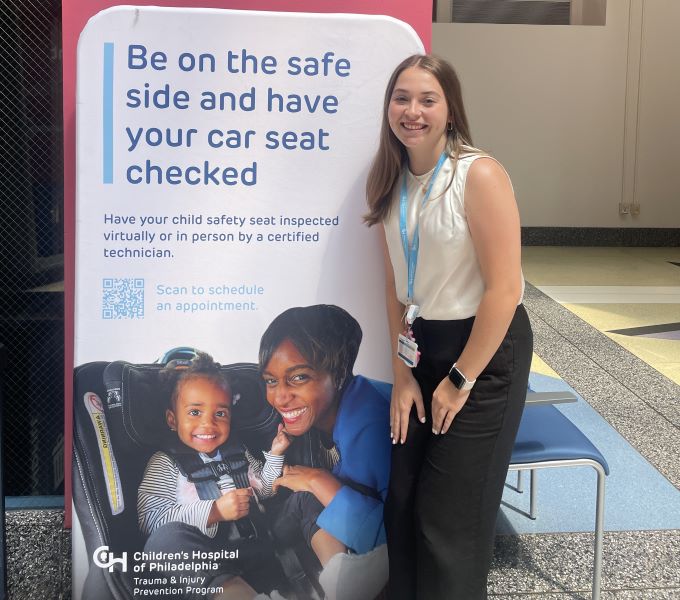

“How do car seats and exercise science fit together?” I have received this question without fail at every conference, networking event, interview, and more. Up until my 2025 CIRP Injury Science Research Experience for Undergraduates (REU), I didn’t really know the answer. My undergraduate educational journey has not been a linear one, but it has been defined by my courage to follow my passions and break the mold.
My curiosity about human injury and biomechanics resulted in a unique education and skill set. I graduate in May 2026 from the Ohio State University with a Bachelor of Science in Exercise Science Education. I am on track to become a certified Exercise Physiologist later this year; additionally, I’m also a certified Child Passenger Safety technician and have been a part of the Ohio State Injury Biomechanics Research Center (IBRC) for over two and a half years. In the classroom, I read electrocardiograms, measure body composition, and create strength and conditioning plans. In the IBRC, I run motion capture software for volunteer vehicle safety studies, write code to analyze kinematic data, and present independent research projects on occupant safety. On any given day I could be helping with a treadmill graded exercise test or a sled crash test, with both determining human thresholds in different ways. I love the variety and range in my life, and each activity aligns with my career goals: to understand causes of injury and how to prevent them.
When I started my REU program under the mentorship of Dr. Valentina Graci, my goal was to pick a path by the end of the summer: vehicle safety or athletic injury. In the world of vehicle safety, I often find myself at a disadvantage because I do not have the educational background of an engineer. I found the REU program through Dr. Graci’s work related to vehicle occupant safety with the Center for Child Injury Prevention Studies (CChIPS), and I assumed that I would spend most of my summer working in the research realm. However, Dr. Graci showed me how to embrace all areas of my education and that it was possible to have a career in multiple fields of study. My definition of interdisciplinary intervention research changed through my experience at CHOP. Week to week, I worked on entirely separate projects and skills, ranging from piloting a human factors study, to observing children with cerebral palsy in a physical therapy study, writing code to analyze 3D point data from a sled test, and creating pressure mat test procedures for a study focusing on older adults.
Eventually, I narrowed my focus and joined an ongoing project examining adolescent knee kinematics post-ACL reconstruction surgery, although within even one project, I experienced a variety of tools and methods: exporting Redcap data, writing statistical analysis code, and conducting in-depth literature review. I used previously collected clinic data to compare video-coded movement strategy, force plate biomechanical variables, and isokinetic strength data. I presented initial results at CIRP Student Research Day and plan to present a poster at the World Congress of Biomechanics in Vancouver in July 2026. Throughout the summer, I gained confidence in my ability to not just work in interdisciplinary science but to be an interdisciplinary researcher.
The projects I assisted during my REU program were as amazing as the people I met in the emergency room, orthopedic department, guest lectures, and REU cohort. One of the most impactful conversations I had was with Dr. Kristy Arbogast. I explained my struggles in choosing a career path and asked how she found a perfect dream job where she was able to pursue all of her scientific passions. She explained how she did not find the perfect dream job but rather created one for herself, building bridges between her skills, passions, and connections. I walked away from that meeting having finally made my decision: Why not do both? I may not be an engineer, but I can build bridges between car seats and exercise science. As I embark on my master's degree in health and rehabilitation science in May, I’m proud to say I can finally answer the question about what connects car seats and exercise science: injury science is never linear, so why should my career be?