Research In Action
Research In Action
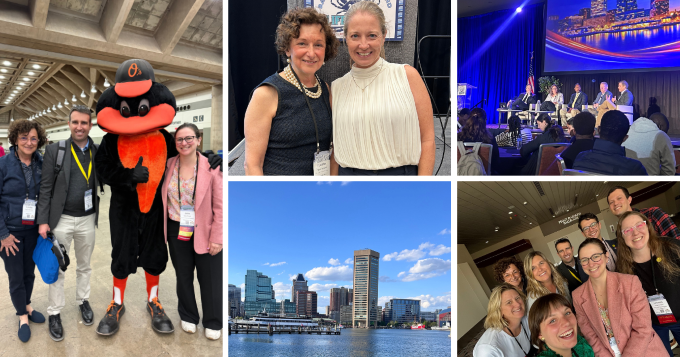

The Lifesavers Conference on Roadway Safety is the leading traffic safety conference bringing together professionals and subject matter experts to prevent injuries and deaths on our roadways. Recently, I attended this year’s Lifesavers Conference in Baltimore with several of my CIRP colleagues. Since the conference ended, we have been talking about the exciting workshops we attended and people we met across a diverse range of professions from public health, law enforcement, and more. Here are three takeaways from the conference that we are excited about:
Technology is a Powerful Tool
Technological advances are redefining what is possible in transportation safety. Technologies like advanced driver assistance systems, automated speed enforcement, vehicle telematics that record driving in real time, and social media platforms to engage the public are all in use today. At Lifesavers, I attended a panel on technology; one of the expert panelists was CIRP affiliate Dr. Kit Delgado, Assistant Professor of Emergency Medicine and Epidemiology at the Perelman School of Medicine and Attending Physician at CHOP. Dr. Delgado shared how he is using phone applications and vehicle telematics to encourage people to be safer drivers through behavioral change principles.
Data Linkage Provides a More Complete Picture of Traffic Safety Issues
Data linkage is expanding our understanding of a crash by connecting information about before, during, and after a crash. By linking together multiple sources, we can improve data quality and unlock key insights into transportation. Data linkage is not easy, but the talks at Lifesavers show that it is possible through strong relationships across organizations, technical experts to navigate challenges, and supportive infrastructure in place. At Lifesavers, CIRP Founder Dr. Flaura Winston shared how CHOP has incorporated driving performance data into primary care health data to make driving safety a routine part of adolescent care and identify intervention pathways.
Research Alone Cannot Eliminate Crashes
As researchers, we are trained to use deliberate methods to determine the scope of a problem and identify interventions that could address or fix that problem. However, it is essential that we partner with others early in the research process who know how to bring interventions to life. As a member of the CIRP Outreach Team, I was energized by conversations with other researchers and communications professionals about the ways they are collaborating to bring about change. Dr. Julie Mansfield from the Ohio State University presented an innovative project she completed in collaboration with CIRP Research Staff Scientist Jalaj Maheshwari. They developed compelling teaching tools for child passenger safety education through physically accurate visualizations of the effects of child restraint system use. As part of their process, they interviewed Child Passenger Safety Technicians and Instructors (CPST/Is) to revise the videos, incorporating the expert feedback of the CPST/Is.
Final Thoughts
There is something electrifying about being in a room with hundreds of people who all share the same goal of keeping people safe on our roadways. One of the reasons I love working in traffic safety is that there are so many interesting and important ways to make a difference. Lifesavers reaffirmed to me that through reaching out across traditional boundaries and creative thinking, we can enact real change and eliminate serious injuries and fatalities on our roadways.