Research In Action
Research In Action
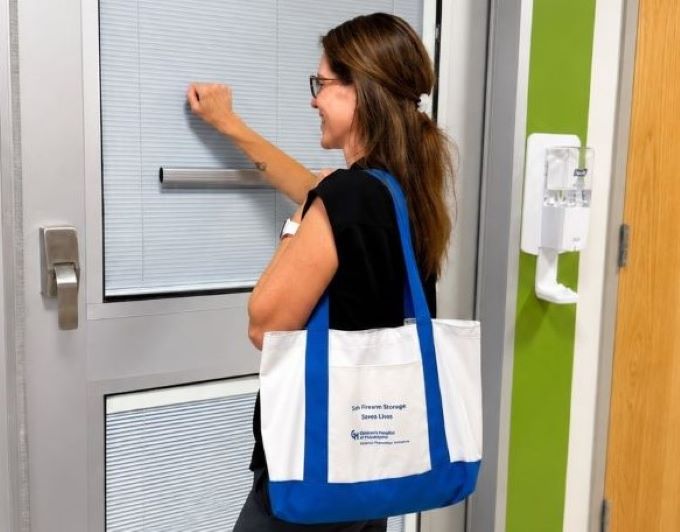

Firearm-related injury remains the leading cause of death among children and adolescents in the United States, underscoring the urgent need for evidence-based prevention strategies across the continuum of pediatric care. Safe firearm storage counseling, particularly when paired with free gun lock distribution, has been shown to promote safer storage practices and reduce children's access to unsecured firearms. Yet these conversations have largely been concentrated in outpatient and emergency care settings, leaving an important opportunity untapped: the pediatric intensive care unit (PICU).
Our recent study, published in Hospital Pediatrics, demonstrates that the PICU is not only a feasible setting for universal firearm safe storage counseling—it is one that families tremendously accept and value.
Using a multidisciplinary implementation approach that incorporated feedback from PICU clinicians and the CHOP Family Advisory Board, we developed a standardized workflow to provide universal firearm safe storage counseling to caregivers of children preparing for discharge or transfer from the PICU. Caregivers received brief evidence-based counseling, a free cable gun lock, and an opportunity to complete a post-counseling survey.
The response was striking. Among 407 eligible caregivers, 350 (86%) completed the survey. Nearly nine in ten (87%) reported that this was the first time a healthcare professional had discussed firearm safe storage with them. Perhaps most importantly, 97% agreed that the PICU was an acceptable setting for these conversations.
Beyond acceptability, the intervention appeared to influence intended behavior. Following counseling:
- 78% reported they were more likely to ask about safe firearm storage in other homes where their child spends time.
- 87% intended to share the information with family or friends.
- 30% planned to use the cable lock they received.
- 17% planned to change how firearms were stored
- 3% planned to remove a firearm from the home altogether.
- More than half planned to give the cable lock to someone else if they did not need it themselves, extending the potential reach of the intervention.
These findings challenge a common assumption that families experiencing the stress of a critical illness may not be receptive to preventive counseling. Instead, our results suggest the opposite: caregivers recognized the value of discussing firearm safety during hospitalization and viewed the PICU as an acceptable environment for receiving this information. In fact, the PICU may be a particularly suitable place to approach families as strong relationships and trust are built during a PICU stay, and families are often focused on child safety and future well-being. Integrating firearm safe storage counseling into this existing background makes injury prevention another component of comprehensive, family-centered transfer/discharge preparation.
As the child injury prevention community continues to seek innovative approaches to reduce firearm injuries, expanding safe storage counseling beyond traditional outpatient settings is an important next step. The PICU should not be viewed solely as a place for lifesaving critical care—it is also a place where meaningful prevention can begin.
By recognizing every hospitalization as an opportunity for injury prevention, we can extend the reach of evidence-based firearm safety interventions and help ensure that more children return home to safer environments.