Research In Action
Research In Action
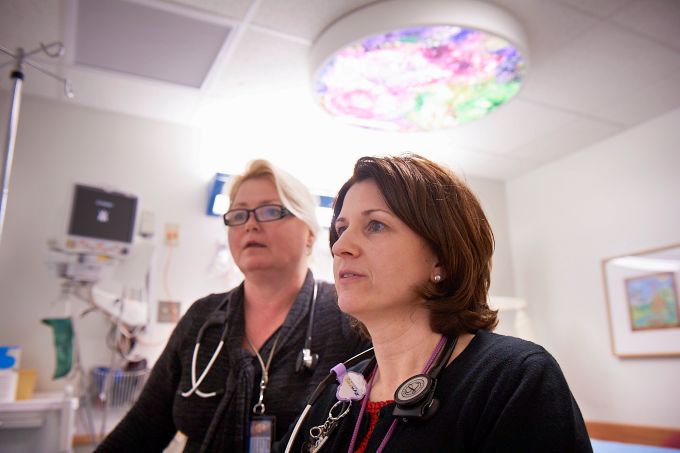

Moderator's note: Dr. Katelin Hoskins, a Research Scholar at CHOP's Center for Violence Prevention and Principal Investigator of the Uniting Pediatric Nurses as Leaders in Firearm Injury Prevention: A Hybrid Trial (UPLIFT) project, was recently featured in a CHOP Research Institute Cornerstone blog post highlighting her team's work evaluating the effectiveness and implementation of a nurse-led firearm storage intervention in the inpatient hospital setting. Below is an excerpt.
A collaboration between Children’s Hospital of Philadelphia and the University of Pennsylvania School of Nursing will evaluate the effectiveness of an evidence-based secure firearm storage intervention and the best ways for nurses to incorporate the intervention into their inpatient workflows to reach eligible parents .
“Nursing is among the nation’s most trusted professions and largest healthcare workforce,” said Katelin Hoskins, PhD, MBE, CRNP, a Research Scholar at the Center for Violence Prevention at CHOP who is also a Psychiatric Nurse Practitioner. “Nurses bring critical clinical expertise and leadership to firearm injury prevention efforts that can save young lives.”
In the United States, gun deaths among children ages 1 to 17 increased by 106% since 2013 and have been the leading cause of death among this demographic since 2020. An estimated 4.6 million children live in homes with access to a loaded, unsecured firearm.
Dr. Hoskins is the Principal Investigator of Uniting Pediatric Nurses as Leaders in Firearm Injury Prevention: A Hybrid Trial (UPLIFT). She and her team will be conducting a clinical trial focused on scale-out and evaluation of S.A.F.E. (Suicide and Accident prevention through Family Education) Firearm, which has been well studied and implemented in pediatric primary care by providers. Dr. Hoskins’ team will adapt S.A.F.E. Firearm for the inpatient pediatric setting, with nurses delivering the intervention.
How It Works
The adapted intervention includes a brief discussion on the importance of secure firearm storage, as well as offering free cable locks and educational materials during patient discharge. There is no screening for household firearms or documentation of firearm ownership in the electronic health record. As a universal intervention, S.A.F.E. Firearm will be delivered to all eligible parents with an overnight hospital stay on a medical-surgical unit.
Strategies to enhance consistent delivery include development of an educational module for inpatient nurses, an electronic health record-based alert, champions, and unit-based research team support.
“We’ve adapted this intervention to make it fit in the hospital context, recognizing that the hospital is very different than a primary care office,” Dr. Hoskins said.
Watch a video on a day in the life of the UPLIFT study featuring Dr. Katelin Hoskins: