Research In Action
Research In Action
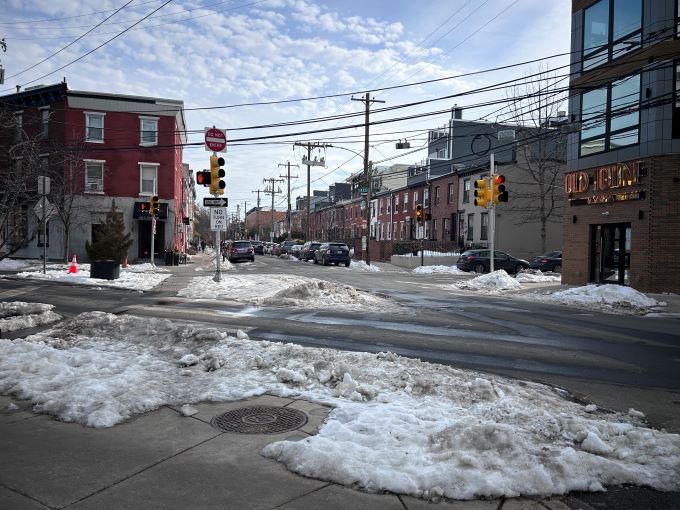

Two weeks ago, a snowstorm promising historic volumes of snow and frigid temperatures sent many Philadelphia residents to shelter in their homes. As the snowfall began to wane, cars, trucks, and buses ventured onto the snowy roads, and residents began digging themselves out of their homes. After nine inches of snow fell on Philadelphia roads, the movement of the city was reflected in the paths left in the snow (sometimes in frustrating ways). The paths we leave behind during snowstorms tell us something important about traffic injury prevention.
As vehicles drive on snowy roads, they leave tire tracks. The interesting part is where there aren’t any tire tracks, revealing where cars don’t travel during a storm. These buildups of snow on roads, sometimes called sneckdowns, can last for days if the snow is not cleared or does not melt. In a city where pedestrians, bicyclists and cars fight for road space, can sneckdowns highlight an opportunity to reimage how roads are shared?
Traffic calming refers to practices that reduce vehicle speeds and traffic volume, often through physical infrastructure like an extended curb for pedestrians to wait to cross a busy intersection. Adding a parking lane is also a traffic calming measure because it narrows the road. For some traffic safety advocates, sneckdowns highlight where traffic calming measures can naturally fit in a road. Where snow untouched by vehicles remains on the road, can some of the road space be given to widen the sidewalk?
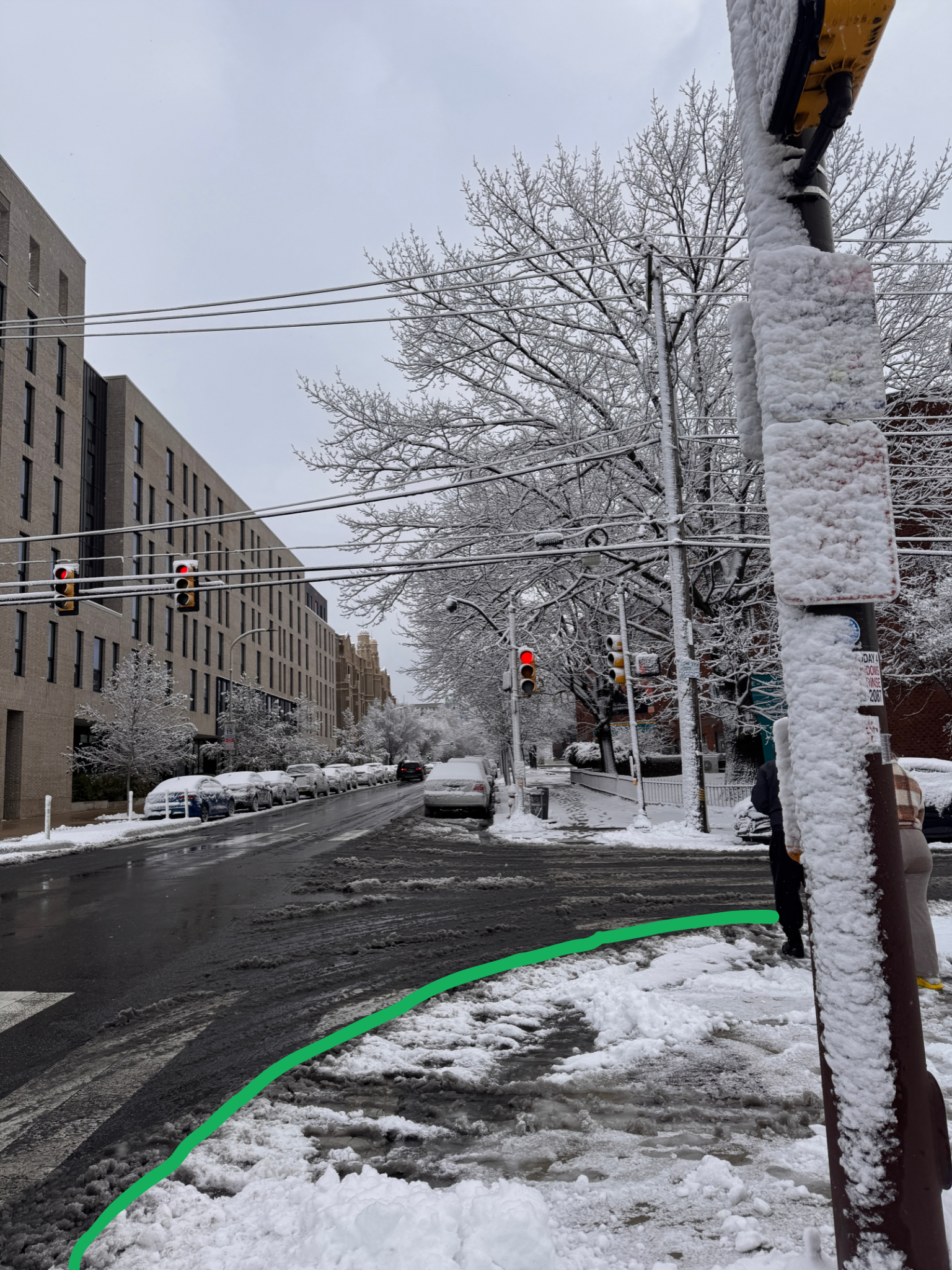
In the image below, taken in West Philadelphia, the leftover snow remaining on the road at this intersection shows where cars haven’t driven. If traffic calming measures were needed at this intersection, the area indicated by the green line would be a possible candidate for an extended curb.
Sneckdowns are not just an aspirational concept: As reported by WHYY, Philadelphia has two redesigned intersections thanks to sneckdowns. In West Philadelphia, the University City District used snowy photos to inform the design of the sidewalk extension at the three-way intersection of Baltimore Avenue, Florence Avenue, and 48th Street. In Passyunk, sneckdowns also informed the redesign of the intersection of 12th street, Morris Street, and East Passyunk Avenue.
I spoke with Kaylen Phillips, transportation planner at the Delaware Valley Regional Planning Commission. Kaylen notes, “Ultimately, 'sneckdowns' reveal what we already know: there are better ways to reallocate roadway space so it's safer and more efficient for all road users. The benefit to having piles of snow on the ground is that it shows people - including key decision makers - what we could do differently."
Kaylen also pointed out that snow remaining on the roads can make it difficult for pedestrians and cyclists to get around, saying, “Snow that continues to block bike lanes, curb cuts, and bus stops weeks after vehicle lanes are plowed demonstrates how the mobility of people walking, biking, and taking transit continues to be deprioritized.”
So, what do sneckdowns have to do with injury prevention? The research is clear that in a crash, the risk of injury increases with higher vehicle speed. Speed is especially dangerous for pedestrians. The City of Philadelphia reports that every week, five children age 17 and younger are hit by a vehicle while walking. Traffic calming measures are intended to slow down vehicles, especially when they occupy the same space with pedestrians at places like intersections.
Philadelphia isn’t the only place where it snows. The sneckdown phenomenon can be seen anywhere snow falls on a road. They offer the opportunity for people like you and me to put on a transportation planner’s hat and think about how people get around. Hopefully we get a break from snow for a while, but the next time it snows, pay attention to what happens after the snow.