Research In Action
Research In Action
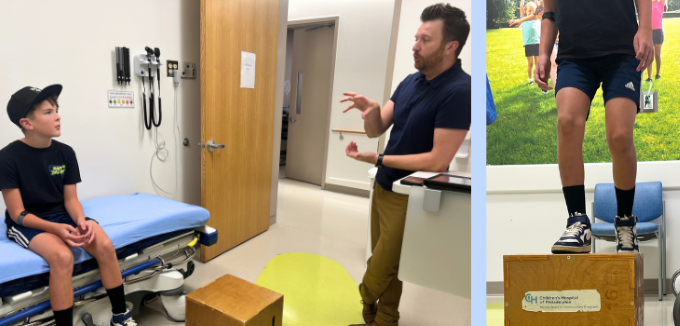

After sustaining a concussion, incorporating exercise and physical activity can play a significant role in accelerating recovery for a young person. Measurement of a patient’s tolerance to exercise is also a key indicator of patient progress.
Previous studies have shown the connection between exercise intolerance (EI) and persisting symptoms after concussion, detailing the diagnostic and management utility of assessing EI in addition to generalized reports of a patient’s symptoms.
One validated assessment of exercise intolerance is the Buffalo Concussion Treadmill Test (BCTT), which uses varying speeds and treadmill inclines to measure a patient’s response to aerobic exercise. While this assessment is useful, the specialized equipment (e.g. a treadmill) needed may not be available outside of specialty care settings, where many pediatric and adolescent concussion patients are diagnosed.
Our question – could we measure exercise intolerance in a more accessible way that does not require specialized staff and equipment?
Specifically, we sought to determine both the feasibility and clinical utility of a modified step test to assess exercise intolerance in pediatric and adolescent concussion patients. Our study included 578 patients, between eight and 18 years of age, who were seen within the Minds Matter Concussion Program between August 2022 and July 2025, and who completed the step test.
Patients were instructed by a certified athletic trainer to step up and down from a wooden box, 12 inches high, up to six minutes, at a pace of 96 beats per minute. We wanted the patients to reach Zone 2, the moderate aerobic activity zone, which we approximated as a heart rate of 135 for the target age group. Exercise intolerance was defined as:
Major intolerance:
- Reaching maximum exertion on the Rating of Perceived Exertion scale
- Reaching 85% of their age-related maximum heart rate
- Experiencing an increase of three or more points on the Visual Analog Scale, used to assess concussion-related symptoms
- Experiencing three or more new individual symptoms
- Asking (or their caregiver asking) to stop the test
Minor intolerance:
- Completing the modified step test where symptoms increased but were below the level of being classified as major intolerance.
Our findings:
- 366 of the 578 patients, or 63%, demonstrated exercise intolerance (either major or minor)
- Among these patients:
- A higher number of females (75% of 194) versus males (54% of 172) demonstrated exercise intolerance, supporting the notion that females may be more susceptible to exercise intolerance after concussion compared to males
- Those with a history of depression or anxiety were more likely to be exercise intolerant than those without these comorbidities. In these subgroups, decreased physical activity, combined with intolerance symptoms when they do exercise, can create multiple layers of barriers to realizing the benefits of an active management approach to concussion recovery.
- Thirty percent of patients had a prolonged recovery. Importantly, patients with exercise intolerance at initial visit had double the risk for prolonged recovery compared to those without, highlighting the ability of this easy-to-implement assessment to be prognostic for poorer outcomes.
Our findings have significant implications for clinicians who are tasked with treating concussion, specifically in primary and acute care settings. These clinicians are unlikely to have access to the same types of specialized equipment available in a specialty care setting and could use a more accessible examination such as the modified step test to measure exercise intolerance. Our study proved it was both feasible and clinically useful to conduct this test, using only a simple 12 inch high box and a heart rate monitor.
Implementing such an assessment in healthcare settings where youth seek concussion care could facilitate identification of those who need targeted referrals for specialized concussion management and help improve overall health outcomes.